FAO’s highest honour for PM Modi, a recognition of India’s agricultural policies: PMFME beneficiary

Bhopal, May 22 (IANS) The felicitation of Prime Minister Narendra Modi with the United Nations’ Food and Agriculture Organisation (FAO)’s highest honour “Agricola Medal” during his visit to Italy, has been described by the farming community as a “proud and exciting’ moment for India.
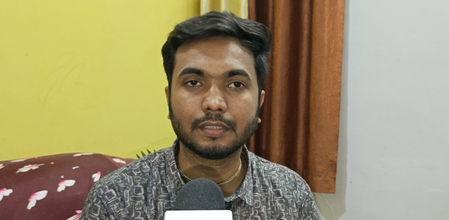
Shubham Tiwari, a Pradhan Mantri Formalisation of Micro Food Processing Enterprises (PMFME) beneficiary saw this as global recognition of India’s agricultural policies.
Tiwari, who is also the founder-operator of Granoxy Unit, said the honour for PM Modi was not just a personal accolade, but a global recognition of India’s agricultural policies, its food security model, and its farmer-centric approach.
Speaking to IANS, he said that the world today views India as a strong leader in the realms of agricultural and nutritional security and under PM Modi’s leadership, India has achieved historic milestones in the food security and agricultural sectors.
Putting the spotlight on various path-breaking initiatives, Tiwari added that the current Indian government is providing successful delivery of free rations to 800 million people, providing direct financial assistance to millions of farmers through Kisan Samman Nidhi and by incorporating technology, infrastructure, and digital systems in the agricultural sector, all this has yielded tangible benefits for the farming community.
The young entrepreneur also asserted that the entire world is now closely observing India’s food security model and agricultural policies.
Commenting on millets, digital agriculture, and farmer welfare schemes, Shubham Tiwari said that Prime Minister Modi’s leadership has ushered in transformative changes across these sectors.
He noted that India has played a pivotal role in securing global recognition for millets, which are now widely regarded across the world as a “superfood”.
He said that, through Granoxy, he is personally working in the Shahdol region (in Madhya Pradesh) with farmers, women’s self-help groups, and the millet-based food ecosystem.
At the grassroots level, awareness of and demand for millets are rising rapidly, thereby boosting farmers’ incomes, improving nutrition, and promoting sustainable farming.
He noted that digital platforms, Direct Benefit Transfers (DBT), and technology-driven agricultural schemes have played a pivotal role in delivering benefits directly to farmers.
This transformation is not confined merely to policy documents; rather, it is tangibly visible in the villages.
–IANS
mr/khz