Local body poll planning reflects readiness for coordinated elections: Gujarat Dy CM

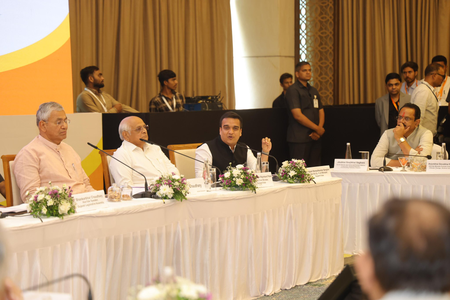
Gandhinagar, May 20 (IANS) Gujarat Deputy Chief Minister Harsh Sanghavi on Wednesday said the state has already demonstrated elements of the ‘One Nation, One Election’ approach through the conduct of combined local body elections, as the state government reiterated its support for simultaneous polls before the Joint Parliamentary Committee (JPC).
Addressing reporters after the committee meeting in Gandhinagar, Sanghavi said Gujarat had previously conducted elections for local self-government institutions together or within the minimum possible time gap, and presented the experience as an example during discussions with the parliamentary panel.
“Our state has already moved ahead in this direction. In the local self-government elections, elections for municipal corporations, municipalities, district panchayats, and taluka panchayats were planned together on the same day or within the minimum possible number of days, and in this way, we have been able to create a truly good model and new direction for all the states of the country,” he said.
The Committee, headed by BJP MP P. P. Chaudhary, is currently on a three-day visit to Gujarat as part of nationwide consultations on the proposed ‘One Nation, One Election’ framework.
The 39-member panel is examining the constitutional, legal, and administrative feasibility of conducting simultaneous Lok Sabha and Assembly elections across India.
“The state government, under Chief Minister Bhupendra Patel, informed the committee that simultaneous elections would be in the interest of the country, the state, and citizens by reducing repeated electoral exercises and administrative disruption,” he said.
According to him, repeated elections place significant demands on public resources, government staff, and voters.
He said elections require months of preparation and affect routine administration due to the enforcement of the Model Code of Conduct.
“Generally, once elections are declared, all these activities cause major disruption to work related to the welfare of ordinary citizens,” he said.
Sanghavi also argued that synchronised elections could reduce inconvenience to voters and ease pressure on public administration and security deployment.
“A person has to go to vote two or three times in five years, travelling from home to the polling station. During every election, many activities in cities stop, offices remain closed, and people have to stand in queues every time,” he said.
He further stated that simultaneous elections could help reduce local-level tensions and disputes that often arise during repeated electoral cycles in villages and urban areas.
The committee’s Gujarat visit has included consultations with senior state officials and political parties.
Today, leaders from the BJP, Congress, and Aam Aadmi Party (AAP) participated in discussions along with ministers, MLAs, and the Speaker of the Gujarat Legislative Assembly.
During earlier interactions, JPC chairman P. P. Chaudhary had described Gujarat’s presentation before the committee as a “model presentation” and said similar structured formats could be suggested to other states for consultations on the proposal.
–IANS
mys/dan