

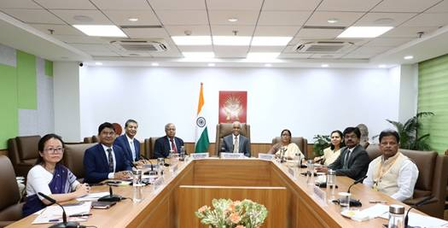
New Delhi, May 19 (IANS) NHRC Chairperson Justice V. Ramasubramanian cautioned State Commissions against exceeding their jurisdiction, underlining the need to avoid duplication of cases and improve information sharing, an official said on Tuesday.
Addressing a day-long virtual conference of the State Human Rights Commissions (SHRCs), along with Special Rapporteurs and Special Monitors, Justice Ramasubramanian said that while courts have expanded the scope of fundamental rights, human rights institutions must remain guided by the definition under the Protection of Human Rights Act.
He said that maintaining jurisdictional clarity would reduce unnecessary litigation and enable Commissions to deliver more effective, high-quality service.
Justice Ramasubramanian urged SHRCs to digitise their operations and join the common, integrated HRCNet portal with the National Human Rights Commission (NHRC), expressing hope for closer collaboration and future in-person engagements among the Commissions.
NHRC Members, Justice (Dr.) Bidyut Ranjan Sarangi, Vijaya Bharathi Sayani, Secretary General Bharat Lal, DG (I) Anupama Nilekar Chandra, and senior officers were present.
Justice Sarangi described the interaction between the NHRC and SHRCs as an important initiative to strengthen coordination.
He called for better communication and coordination between them to ensure effective implementation of orders and timely delivery of benefits to persons in distress, particularly in sensitive matters such as custodial deaths.
Sayani urged SHRCs to increase field visits and engage more with affected communities.
She said that coordination between SHRCs and NHRC Special Monitors and Special Rapporteurs may strengthen institutional effectiveness. She also highlighted the initiative of the Karnataka government to display SHRC contact details for public assistance.
Secretary General Bharat Lal highlighted that in the last 5 years, 4.28 lakh complaints have been received out of which major complaints fall in different categories – Police related violations (18 per cent), organised exploitation by mafias (17.4 per cent), service matters – non-payment of pensions/salary (6 per cent), violations of women’s rights (5.8 per cent), conditions in jails and prisons (3.5 per cent), Workers rights violations (2.2 per cent), health related violations (2 per cent), human rights violations in educational institutions (2 per cent), child rights violations (1.7 per cent) among others.
–IANS
rch/dan