
Delhi HC grants bail in NDPS case over failure to provide written grounds of arrest

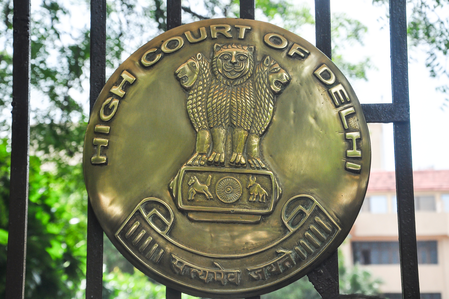
New Delhi, May 14 (IANS) The Delhi High Court has granted regular bail to an accused booked under the Narcotic Drugs and Psychotropic Substances (NDPS) Act, holding that the failure of the investigating agency to furnish written “grounds of arrest” violated the constitutional safeguards guaranteed under Article 22(1) of the Constitution.
A single-judge Bench of Justice Anup Jairam Bhambhani, while allowing the bail plea of one Brijesh Kothia, said the requirement of informing an arrestee about the grounds of arrest is “not a technical formality but a substantive, sacrosanct safeguard of personal liberty”.
“Can a weighty constitutional safeguard be diluted to an optional procedural nicety? It is this cardinal question that presents itself for consideration in the present case,” the Delhi High Court observed at the outset of the judgment delivered on Wednesday.
The applicant had sought regular bail in connection with an FIR registered by the Delhi Police Special Cell under various provisions of the NDPS Act.
The prosecution alleged offences relating to narcotic substances, criminal conspiracy and financing illicit traffic.
The applicant argued that although he was arrested from Ankleshwar in Gujarat on October 13, 2024, he was never supplied the grounds of arrest in writing either at the time of arrest or before being produced for transit remand before a Gujarat court.
His counsel relied on a series of Supreme Court rulings to argue that communicating the grounds of arrest in writing is mandatory and flows directly from Article 22(1) of the Constitution.
Opposing the plea, the Delhi Police argued that at the time of Kothia’s arrest in October 2024, there was no binding requirement to furnish written grounds of arrest immediately, since the Supreme Court’s decision in the Mihir Rajesh Shah case was delivered only in November 2025.
The prosecution further contended that the accused had suffered no “demonstrable prejudice” and that the remand applications filed before courts in Gujarat and Delhi sufficiently disclosed the basis of arrest.
Rejecting the prosecution’s stand, the Delhi High Court held that the arrest memo only mentioned generic “reasons for arrest” and did not contain personalised “grounds of arrest” specific to the accused.
“There is no material to show that any separate written grounds of arrest were furnished to the petitioner at the time of his arrest in Gujarat or soon thereafter,” Justice Bhambhani said.
The judgment added that the constitutional requirement stood violated “at the very first step” when the petitioner was arrested and produced for transit remand without being supplied written grounds of arrest.
Calling the lapse a “substantive constitutional infraction” rather than a curable procedural defect, the Delhi High Court said the omission caused “demonstrable prejudice” to the accused by depriving him of a meaningful opportunity to instruct counsel and oppose remand proceedings.
“Deprived of written grounds of arrest in advance, the petitioner was effectively disabled from instructing counsel and meaningfully resisting the prayer for transit remand,” it observed.
The Delhi High Court further said that recent Supreme Court rulings make it clear that non-supply of written grounds of arrest within the stipulated time-frame renders the arrest and subsequent remand legally unsustainable.
“Read together, these authorities leave no room for doubt that non-supply of written grounds of arrest within the stipulated window vitiates the arrest and the remand,” Justice Bhambhani said.
While granting bail, the Delhi High Court clarified that illegality in arrest would not invalidate the investigation or trial and that the investigating agency remained free to take further steps in accordance with law, including effecting a fresh arrest after complying with constitutional requirements.
The judgment also took note of the fact that Kothia had spent more than one year and four months in judicial custody, his jail conduct was reported to be satisfactory, and no criminal antecedents were cited against him.
The Delhi High Court directed Kothia to furnish a personal bond of Rs 1 lakh along with two sureties and imposed conditions including surrender of passport, cooperation with the investigation, and restraint from influencing witnesses.
–IANS
pds/rad