
Gujarat CM welcomes Union Cabinet nod for India’s first semi-high-speed rail corridor

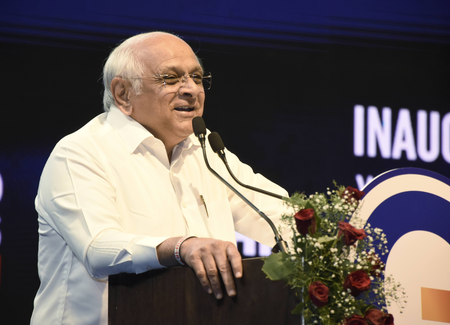
Gandhinagar/New Delhi, May 13 (IANS) Calling Gujarat’s selection for India’s first semi-high-speed rail corridor a matter of pride for the entire state, Chief Minister Bhupendra Patel on Wednesday welcomed the Union Cabinet’s approval for the Ahmedabad-Dholera semi-high-speed double-line rail project estimated at around Rs 20,667 crore.
The project, approved by the Cabinet Committee on Economic Affairs, chaired by Prime Minister Narendra Modi, will connect Sarkhej in Ahmedabad with Dholera and is being positioned as Indian Railways’ first semi-high-speed corridor developed with indigenous technology.
Responding to the development, Patel thanked PM Modi and Railway Minister Ashwini Vaishnaw for what he described as “a major development-oriented gift to Gujarat under the PM Gati Shakti National Master Plan”.
Patel said, “Gujarat receiving the country’s first semi-high-speed rail project was a matter of pride, and the project would become a historic milestone in the state’s modern infrastructure development.”
He emphasised that the corridor would act as a reference model for the phased expansion of semi-high-speed rail projects across the country.
The proposed rail line will provide faster connectivity between Ahmedabad, the Dholera Special Investment Region (SIR), the under-construction Dholera airport and the Lothal National Maritime Heritage Complex.
The Centre said the corridor is aimed at improving multimodal connectivity and logistics efficiency while facilitating seamless movement of passengers, goods and services.
According to details released following the Cabinet approval, the 134-km broad-gauge double-line corridor is targeted for completion by 2030-31.
Railway Minister Vaishnaw said the trains on the route will have a design speed of 220 kmph and an operational speed of 200 kmph. “Travel time between Sarkhej and Dholera is expected to come down significantly after completion of the project,” officials said.
The government said the project would improve connectivity for around 284 villages, benefiting nearly 5 lakh people.
Officials also highlighted its environmental benefits, stating that “the rail corridor is expected to help reduce logistics costs, lower fuel consumption and cut carbon emissions”.
The Centre further said the project could reduce oil imports by an estimated 0.48 crore litres and lower carbon dioxide emissions by around 2 crore kg.
–IANS
mys/uk