‘Highly vulnerable’ Pak not on Middle East battlefield but exposed to every ripple it creates: Report

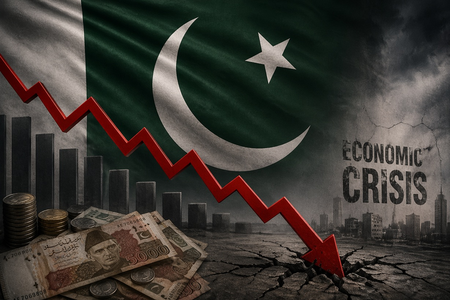
New Delhi, April 25 (IANS) Pakistan may not be a direct participant in the ongoing tensions in the Middle East, but its weak economic structure makes it highly vulnerable to global shocks arising from this conflict, according to a new report.
The report by Business Recorder showed that while geopolitical conflicts initially send tremors through global financial markets, their deeper and more lasting impact is often felt domestically, especially in economies like Pakistan that are heavily exposed to external variables.
A rise in energy prices, tightening global financial conditions and currency pressures may appear as routine adjustments for many countries, but they have acted as a significant economic trigger for Pakistan, it said.
These shocks are transmitted through higher import bills, inflationary pressures and weakening exchange rates, ultimately straining the domestic economy.
Moreover, the neighbouring nation imports up to 80 per cent of its oil requirements, with its petroleum import bill estimated at around $18 billion in FY23.
The report said that a sustained increase of $10 per barrel in global oil prices could add up to $1.5 billion annually to import costs, intensifying pressure on already limited foreign exchange reserves.
It noted that such increases not only weaken the Pakistani rupee but also fuel inflation, particularly through higher fuel and electricity prices — factors that often spill over into political instability.
Over the past decade, global volatility driven by oil prices, interest rates or capital flows has repeatedly followed a similar pattern in Pakistan.
According to the report, a key area identified is energy diversification. Despite having significant renewable potential — particularly wind corridors in Sindh and high solar irradiation across Balochistan and southern Punjab — renewables account for only about 6 per cent of Pakistan’s energy mix.
Another critical gap is the lack of adequate strategic petroleum reserves, it said.
Pakistan’s current capacity covers only a few weeks of consumption. Expanding reserves to cover 30–45 days could provide crucial buffer time during global supply disruptions, the report noted.
The report also pointed out the risks of heavy reliance on dollar-denominated trade.
–IANS
ag/na