New Delhi, April 5 (IANS) The European Union, through its Generalised Scheme of Preferences Plus (GSP+), granted Pakistan duty-free access to its lucrative markets in January 2014 in exchange for its commitment to uphold international human rights, labour, environmental and governance standards.
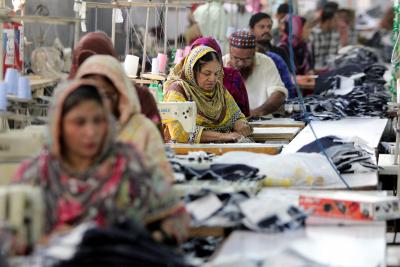
However, Pakistan’s garment factories are brazenly violating the promise by exploiting workers’ rights and barring the formation of labour unions which prevents them from even raising these issues with the owners, according to a report in Greece’s digital news portal NewsBomb.
The GSP+ arrangement has seen Pakistan’s export economy flourish with more than 7 billion euros of the country’s 8.3 billion euros in EU imports being tariff-free in 2024 and apparel accounting for nearly three-quarters of the benefit, the report points out.
However, as Pakistan’s garment exports flourished, its record on core labour standards lagged far behind the commitments it undertook, raising fundamental questions about the government’s seriousness in meeting its own legal obligations, the report points out.
Labour inspectors, nominally responsible for enforcing standards, are outnumbered and under-resourced. Their reports routinely cite violations of working hours, wage laws and safety requirements — yet follow-up enforcement actions are sporadic at best. In many factories, persistent non-compliance goes unchecked, particularly in smaller subcontracting facilities outside Karachi and Lahore, where oversight is weakest, the report states.
Under the GSP+ arrangement, vulnerable developing countries are allowed to export to the EU on almost duty-free terms on the condition that they effectively implement 27 international conventions covering human rights, labour rights, environmental protection, and good governance.
Pakistan ratified all these conventions, including the International Labour Organisation’s (ILO) core labour standards on freedom of association and collective bargaining. The expectation was clear — ratification would be followed by effective domestic enforcement.
The report highlights that a major evaluation of Pakistan’s GSP+ compliance, launched by the International Labour Organisation and Pakistan’s Ministry of Overseas Pakistanis and Human Resource Development in September 2023, identified significant compliance gaps, the report
The assessment discussed at a tripartite forum involving government, employers and workers, acknowledged legislative effort but underscored enforcement weaknesses — especially in labour rights and union access — that undermine Pakistan’s commitments.
The ILO and EU representatives noted that inspection and monitoring remained weak, delaying concrete improvements on the ground.
Pakistan’s textile and apparel sector, the backbone of its GSP+ export performance, has long struggled with labour rights issues.
Worker interviews and independent research document widespread denial of trade union rights, precarious employment contracts, excessive working hours and unsafe conditions.
Factories producing for EU markets in Pakistan are often marked by intimidation and administrative pressure against union formation. Despite legal protections on paper, the reality for garment workers remains one of constrained agency, the report observes.
Trade union organisers have reported systematic obstacles to registering unions in export-oriented factories. Workers seeking to affiliate or bargain collectively face non-transparent procedures, employer influence over union certification, and bureaucratic delay.
These practices run counter to Pakistan’s obligations under the ILO conventions it has ratified, including Convention No. 87 on Freedom of Association and Convention No. 98 on the Right to Organise and Collective Bargaining, the report points out.
–IANS
sps/na